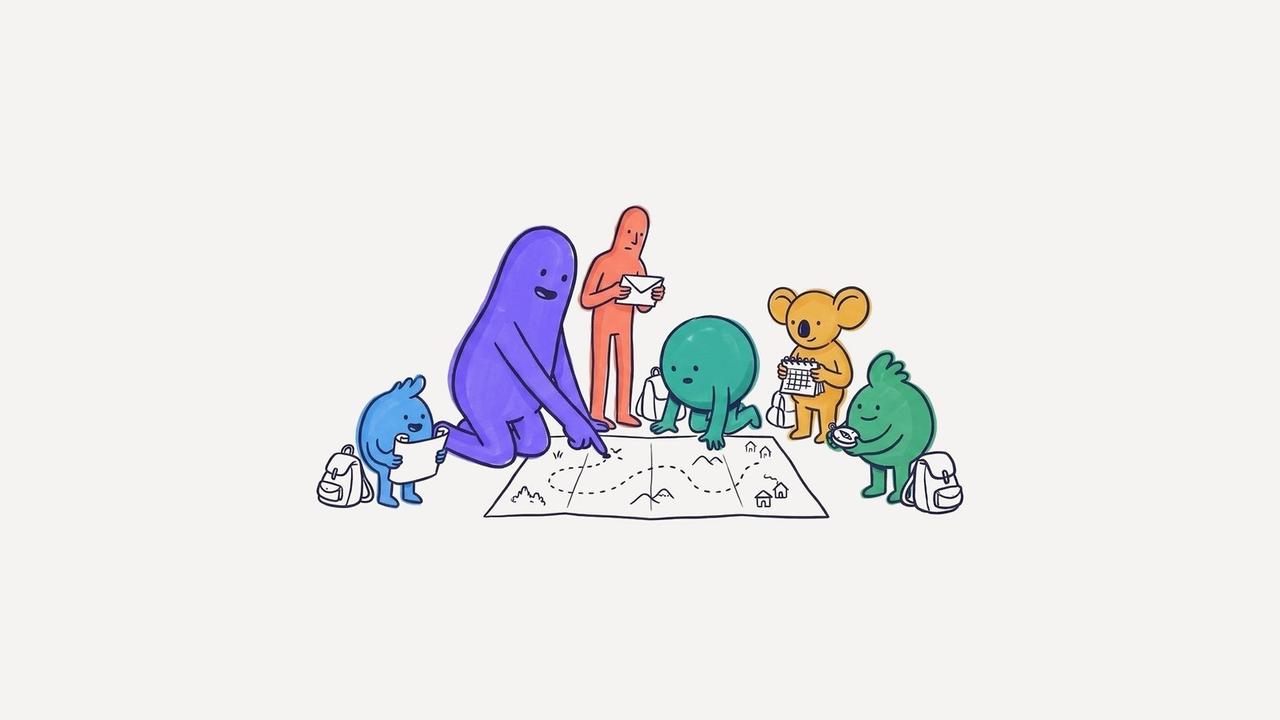
An AI marketing team is a group of AI agents that does a business's marketing work between them. One plans and decides what matters this week; the others write the emails, build the pages, run the follow-ups and read what came back. The owner doesn't do the work. The owner approves it.
That's the short answer, and most definitions stop there. What decides whether a team like this is any use sits underneath: what the agents know about your customers when they start working.
A word on where we stand: we build one of these, 314. What follows is how we think about the category. Hold any product to it, ours included.
Why a team, not one agent
An AI marketing agent handles one job. It drafts posts, or answers new leads, or adjusts ad bids. That can be useful, and you are still the one who decides which job matters, gives it the context and fits its output into everything else.
A team splits marketing the way a company does. In 314 the lead is an AI CMO (the role is explained in What is an AI CMO?). It learns the business, sets goals and brings in the agents the work needs: a copywriter, a designer, an SEO agent. The copywriter doesn't decide who gets an email, and the one who decides doesn't write it.
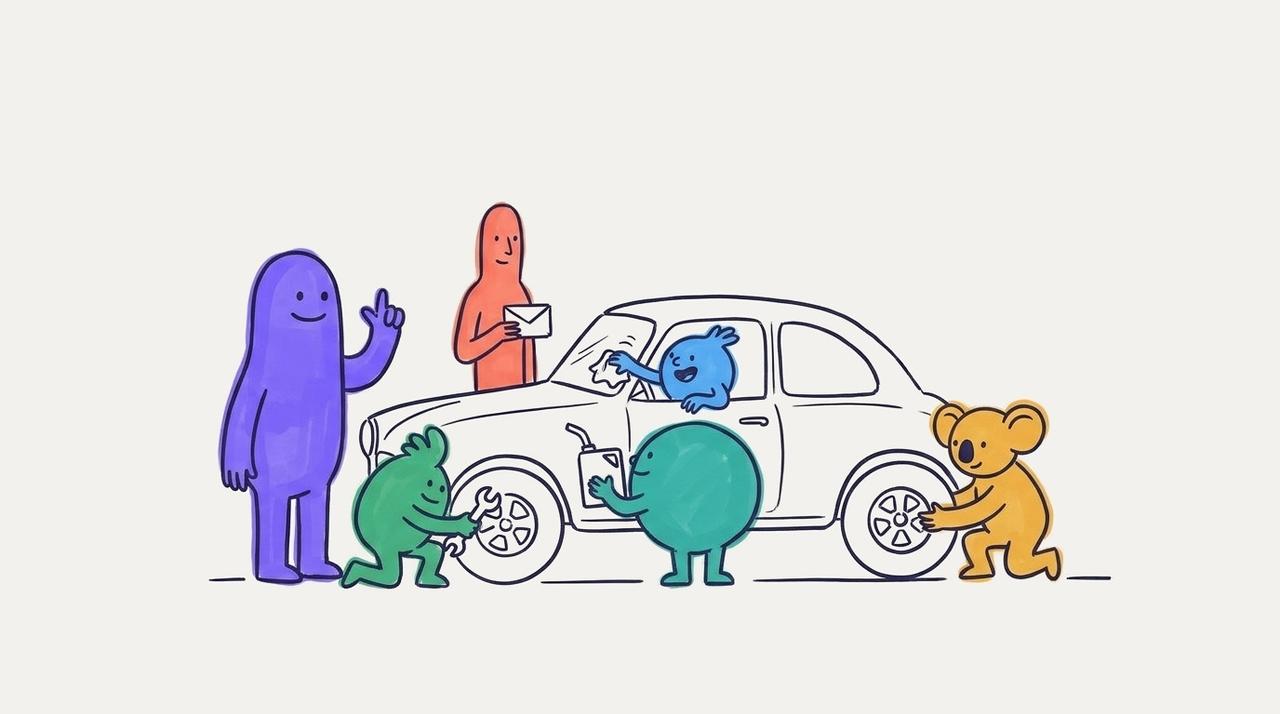
The pieces meet in one place, and that place is the real difference. Five agents that each start from a blank prompt are five tools. They work as a team when they share a memory: what the business sells, who its customers are, what went out last week and what happened after.
What the agents work from
Most small-business marketing still runs on a list of addresses and a guess. "Everyone who bought in the last 90 days" is a segment. It doesn't tell you who has already booked their next visit, who read the price page twice last night, or who stopped coming in June.
An AI marketing team is only as good as the history it can read. In 314, the tools you connect (booking system, payments, website, email, CRM) are joined into one profile per customer. What those tools hold loads on the first day; the site tracker collects from the day it's installed. With only an email list connected, the team writes for a guessed audience, like anyone would.
Writing a decent email is cheap now. Any chatbot will do it in seconds. Knowing that this person should get it on Thursday, and that one shouldn't get it at all, is the actual work, and it comes from the history.
How the work runs
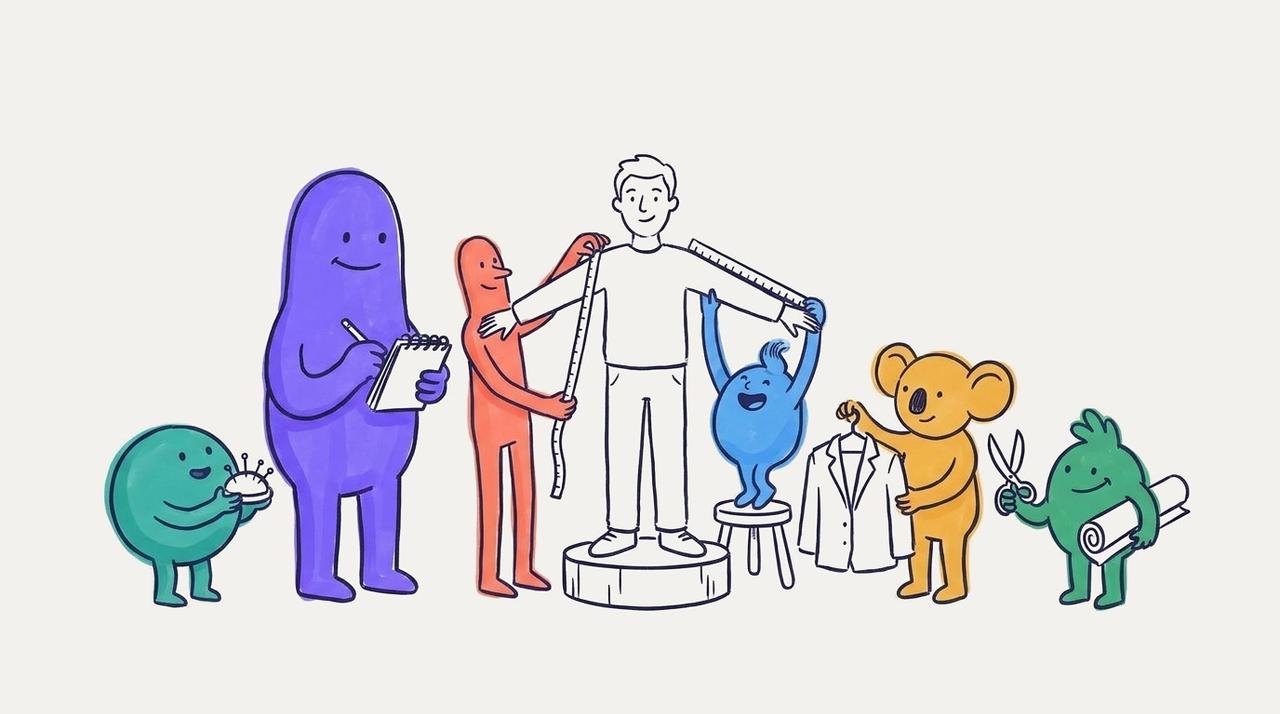
The team reads the customer history and picks what to do. The agents build it: an email, a page, a flow. It reaches the owner in Agenda as a card that says what, for whom, why, and what the team expects. Nothing goes to a customer before the owner says yes. Results then come back into the same profiles, and the next decision starts from them.
A yes to a flow covers its rules: who enters, what they get, when it stops. So the owner isn't pressing send on every email, and a change to the flow comes back as a new card. See how strategies are built.
One flow, start to finish
SvitNail is a nail studio in La Jolla, San Diego, that books through Mangomint. This is one of its flows, a reminder to book the next visit, and how it changed once it was running.
What the team read first. Before writing anything, 314's AI team went through the studio's receipts. Clients who rebook online do it around day 24 after a manicure, for a slot a few days out, when the nails have already grown.
What it built. So the first email lands at day 14 for a manicure and day 18 for a pedicure, which lasts longer: ahead of the decision, and only to clients with nothing on the books. A booking check runs before each email. First-timers get their own day-14 email, because they don't yet know what a three-week-old set should look like. Seven in ten clients who enter the flow rebook on their own before any email is due, so it writes only to the rest. The owner approved it once.
What came back. The day-14 email was clicked by one in five of the people who opened it. The day-21 and day-28 emails were opened just as often and clicked by nobody. Same template, same sender, same button. The difference was in the words: day 14 said the slot was easiest to take now, and the later two told the reader there was no hurry.
What it changed. Each silent email got a second version, sent to half the people, with one concrete reason to book this week and nothing else changed. The team said why it ran a test instead of rewriting: the people left at day 21 are the ones who didn't book at day 14, so part of the gap is simply who remains. It set the date to judge the test before the test started.
None of this needed faster writing. It needed the visit rhythm, the calendar and the team's own click data in one place, and someone looking at them every week.
Across all of SvitNail's flows, from late July to October 22, 2026, 34 people booked after an email from 314's AI team: 11 new clients, 17 who came back after a long gap, and 6 who booked their next visit after a reminder. Nobody was held back as a control, so these are people who booked after an email, not bookings the emails added.
How we counted: a booking counts only if it was made by the person an email from 314's AI team went to, after that email: about half within a day, all within 21 days. 314 then checks each one against that person's own booking history and leaves it out when something else explains it, such as their usual visit rhythm, a booking already started on the site, or a long gap since they last opened an email. 32 bookings were left out this way. Each person is counted once.
Compared with the alternatives
An agency does the work in the channels it's hired for, often ads, SEO or social, and it brings people who can run a shoot or a launch. It works from its channels' data and what you tell it in briefs.
A marketer you hire learns the business from the inside: your customers by name, your suppliers, what sold last spring and what didn't. For a small business that's also the most expensive option, and one person can only do so much in a week.
AI tools on their own cost the least. They're fast at one job when you know exactly what you want, and the deciding, briefing and sending stay with you.
An AI marketing team sits in between: the doing is done for you, and the deciding is done from the customer history rather than from a brief. Plenty of businesses will keep an agency for campaigns and use a team for the daily work with their own customers.
| Who does the work | What it works from | Owner's part | Best at | Typical cost | |
|---|---|---|---|---|---|
| AI marketing team (314) | 314's AI team: emails, texts, popups, pages, flows | Customer history from the tools you connect, one profile per customer | Says yes or no in Agenda, answers questions | Steady daily work tied to each customer | From $250 a month |
| Agency | The agency's people, often using AI tools | Its channels' data and your briefs | Briefs, calls, reviews | Campaigns, ads, creative production | About $1,500–$5,000 a month for smaller businesses |
| In-house marketer | Your hire | What they learn in the business | Hiring and managing them | Knowing customers in person, partners, events | Median pay $78,760 a year for marketing specialists, before taxes and benefits |
| AI tools on their own | You, with the tools drafting | What you paste in | Deciding, briefing, sending, checking | One job, fast | About $3,000–$12,000 a year in tools |
Prices as of October 2026. Agency and AI tools: Brenton Way. Pay: US Bureau of Labor Statistics, May 2025.
Who it's not for
If your customers aren't recorded anywhere, the team has little to read. No booking system, card payments without names, no list: start by collecting names and visits, and come back when there's a history.
If most of your business comes from people you meet, at trade shows, through referrals or across the counter, a team can draft the follow-ups and keep track of who said what. The relationships stay with you.
If what you need is one big creative push, such as a rebrand, a video or a launch with a large ad budget, that's work for an agency or a studio.
And if you want marketing off your plate without ever looking at it, this isn't that. Someone has to read the cards and say yes or no. In practice that's minutes, but it isn't zero.
Frequently asked questions
What is an AI marketing team?
A group of AI agents that does a business's marketing work between them: one leads and decides, the others write, build and send, and they read the results. The owner approves what goes out.
Is an AI marketing team the same as an AI agent?
No. An AI agent does one job when you hand it one. A team splits the work into roles, decides what to do next, and shares one memory of your customers and of what it has already sent.
Can an AI marketing team replace a marketing hire?
For a business that never had a marketer, it does work a hire would do: emails, follow-ups, site pages. If you have a marketer, it takes the work they never get to, and they can be the one who approves.
Does an AI marketing team replace an agency?
For the daily work with your own customers, yes. For one-off work such as a campaign, ad creative or a rebrand, bring in an agency as well; many businesses keep both.
How much does an AI marketing team cost?
314 starts from $250 a month. You can sign up and start, or book a call first.

Over five years founding several companies and building software products of many kinds. Now building the marketing team small businesses never had.