A repeat customer is someone who has bought from you more than once. That's the whole definition. The useful part is what sits between the first visit and the second, and between every visit after that: a gap. Each regular has their own. A haircut client might come every six weeks, a gel manicure client every three or four, a dog groomer's client every two months.
Most small businesses already hold these gaps. The dates are in the POS or the booking system. Almost nobody looks at them, so the business only learns a regular has drifted when they've been gone for months. This guide is about the stretch before that: how to keep people who still come in, coming in on their own schedule. If someone has already gone quiet, that's a different job, and our guide to win-back campaigns covers it.
Repeat, returning, recurring
You'll see three words used almost interchangeably. They're worth separating, because each one asks a different question of your data.
A returning customer has come back at least once after a first purchase. A repeat customer buys from you again and again; in practice the two words are used for the same people. A recurring customer pays on a schedule, like a membership or a subscription, so the next purchase happens without a decision.
Giva's piece draws these lines clearly. For a salon, a clinic or a shop, the distinction that matters is simpler: is this person still coming at their usual pace, or have they slipped past it?
Why rhythm beats a loyalty card
The standard advice is a loyalty program: a punch card, points, a free tenth visit. Harvest is honest about both paper and digital cards, and they do work for some businesses, mostly ones where people buy often and on impulse, like a coffee shop.
For a service business, a card rewards people who would have come back anyway. It doesn't tell you anything about the client who used to come every four weeks and is now at week seven. That client hasn't decided to leave. They've just not been reminded at the moment they would normally book, and something else filled the slot in their week.
Harvest also suggests following up with a new client two days, two weeks and two months after a customer's first interaction. That's a sensible starting point when you know nothing about a person. Once they've been in twice, you know more: you know their gap. A gel manicure lasts three to four weeks, so a two-month check-in arrives after the client has either rebooked or started looking elsewhere. The follow-up should move to the customer's own rhythm as soon as you can see it.
Find each customer's rhythm
You don't need software for a first look. Export a year of visits from your POS or booking system: one row per visit, with the customer and the date. For each customer with at least three visits, take the days between visits and find the usual gap. The median works better than the average, because one long holiday won't drag it.
Here is a made-up example with five customers:
| Customer | Visits in 12 months | Usual gap | Last visit | Expected next | Status today |
|---|---|---|---|---|---|
| A | 12 | 28 days | 20 days ago | in 8 days | on rhythm |
| B | 8 | 42 days | 45 days ago | 3 days ago | a little late |
| C | 4 | 90 days | 40 days ago | in 50 days | on rhythm |
| D | 9 | 35 days | 70 days ago | 35 days ago | drifting |
| E | 6 | 49 days | booked for Friday | — | booked |
Customer D is the one to worry about: twice past the usual gap with no booking. Customer C is not late at all, even though 40 days sounds like a long time. A single "remind everyone after 30 days" rule would get both of them wrong.
The same export gives you your repeat customer rate: the share of customers in a period who bought more than once. Take everyone who bought in the last 12 months, count how many bought two or more times, and divide. Shopify's guide has the formula with more variants. Work it out once now, so you have a number to compare against in three months.
When to write, and when not to
With rhythms in hand, the rule is short. Write a little before or around the date a customer would normally book. Don't write at all to anyone who already has a booking.
The second half is the one most businesses skip, and it's where the damage happens. A "time to book again!" email to someone booked for Friday tells them you don't know who they are.
41 people got no extra email
At SvitNail, a nail studio in La Jolla, San Diego, 314's AI team runs a reminder after each manicure. Gel lasts three to four weeks, so a "book again" email the day after a visit would only undercut the work just done. The team set the flow to skip anyone who has already booked their next visit. From August 11 to October 25, 41 people got no extra email this way.
The people who hadn't booked got the reminder at their usual time. From July 25 to October 22, 2026, 6 people booked their next visit after a reminder.
Those 6 are among 34 people who booked at SvitNail after an email from 314's AI team in that period; the full case has the rest.
How we counted: a booking counts only if it was made by the person an email from 314's AI team went to, after that email: about half within a day, all within 21 days. 314 then checks each one against that person's own booking history and leaves it out when something else explains it, such as their usual visit rhythm, a booking already started on the site, or a long gap since they last opened an email. 32 bookings were left out this way. Each person is counted once.
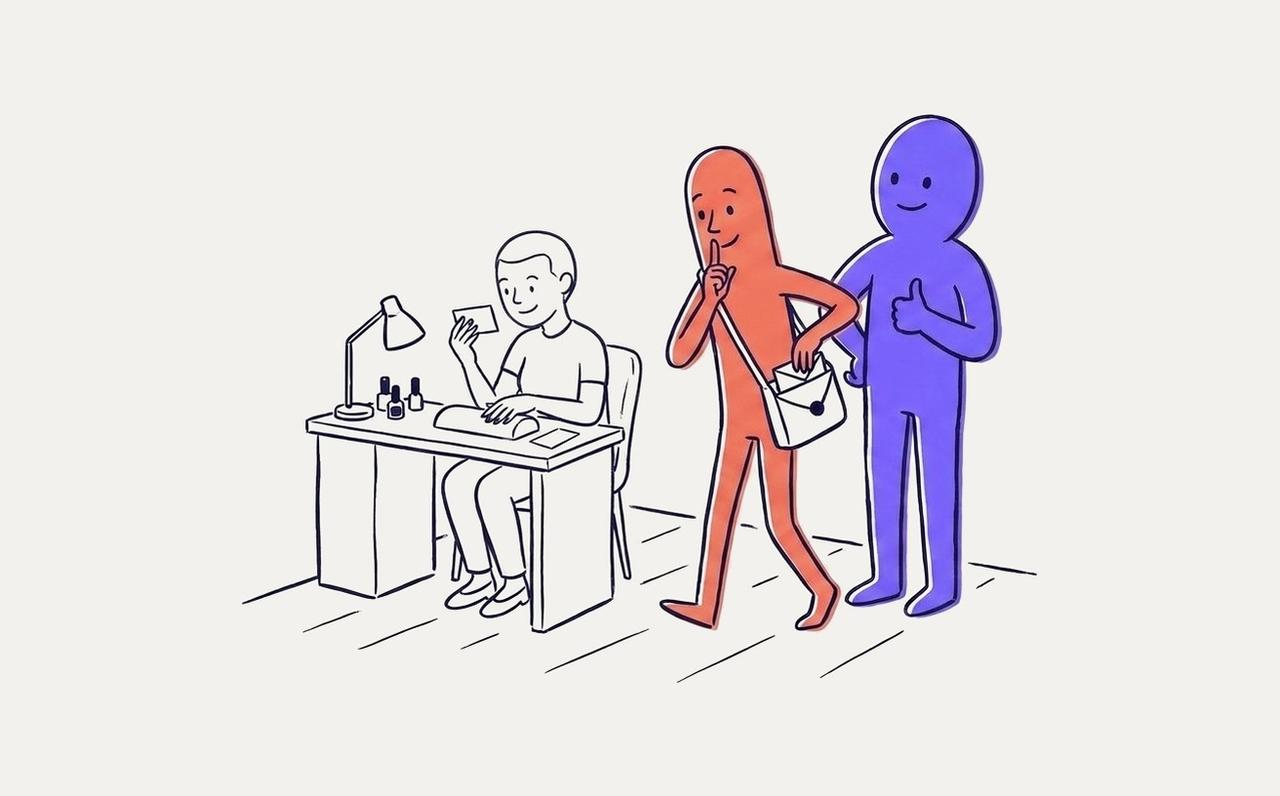
What makes a good reminder is mostly what it leaves out. No discount: these are people who come anyway, and a coupon teaches them to wait for one. No "we miss you": it hasn't been long enough to miss anyone. Something like this:
Example reminder email
Subject: Time for your next set?
Hi [first name], it's been about [usual gap] since your last visit. If you'd like your usual time, here's the booking link: [link]. Our prices are here if you want a look: [link].
[Business name]
Book the next visit before they leave
The cheapest reminder is the one you never send. If the customer books the next visit at the counter, the gap takes care of itself.
This works best when the person at the desk offers a specific time, not a general "want to book again?". "Same time in four weeks, the 3rd at 10?" is easy to say yes to. For businesses with longer cycles, a text the day before the visit with the option to move it keeps the slot from turning into a no-show.
Then the reminder flow only has to handle the people who didn't book at the desk, and it must check the calendar before each send. Someone who rebooks by phone on Tuesday shouldn't get Wednesday's email.
When someone drifts off rhythm
Sooner or later a regular will pass their usual gap with no booking and no answer to the reminder. At that point they're no longer a "keep" problem, they're a "win back" problem, and the tone changes: one plain email with your prices, no pressure, and an honest count of who actually books after it. Our win-back guide has the timing rule and three emails you can copy.
The two jobs connect. If you know each customer's rhythm, you also know the exact day someone moved from one list to the other.
How 314's AI team does it
Full disclosure: this is what we build.
314's AI team (AI agents led by an AI CMO) connects to the booking system, POS, payments and site, and builds one profile per customer from what those tools hold. From the visit dates it sees each person's usual gap. It proposes a flow: who gets a reminder, when, what it says, and who is skipped because they've already booked. The owner reads it and says yes once. After that the flow checks the calendar before every email, and each booking that follows is checked against the person's own history before it counts.
None of it replaces the person at the front desk who books the next visit. It covers the clients who didn't, without anyone having to remember them.
Three ways to keep regulars
| Loyalty card | Fixed follow-up (e.g. 2-2-2) | Each customer's rhythm | |
|---|---|---|---|
| What it uses | Number of visits | Days since first visit | Each customer's usual gap |
| Who it reaches | People already coming back | Everyone, on one schedule | Each person near their own date |
| Who is skipped | No one | Usually no one | Anyone already booked |
| Owner's time | Low, once set up | Low, once set up | Low with software, an hour a month by hand |
| Best for | Frequent, impulse purchases | New customers you know little about | Services people book on a cycle |
The three can live together. A café may get most of what it needs from a card. A salon, a clinic or a repair shop gets more from rhythm, because their customers' next visit is already written in their history.
If you're working on new customers at the same time, our guide on how to get more customers covers the other side.
FAQ
What is a repeat customer?
Someone who has bought from your business more than once. In a service business it usually means a person with a regular gap between visits, like every four or six weeks.
How do you get repeat customers?
Give a good first visit, offer to book the next one before they leave, and remind people who didn't book around the time they'd normally come back. Don't send reminders to anyone who already has a booking.
What is another word for "repeat customers"?
"Returning customers" is the closest and is often used for the same people. "Regulars" is the everyday word. "Recurring customers" usually means people on a subscription or membership.
What is a good repeat customer rate?
It depends on what you sell and how often people need it, so the most useful comparison is your own rate three months from now. Work it out from a year of POS or booking data: customers who bought two or more times, divided by all customers in that year.
How often should I contact repeat customers?
Around their own usual gap, not on a calendar you set for everyone. A client who comes every four weeks can hear from you near week four; one who comes twice a year, much less often. Anyone already booked doesn't need a reminder.
How much does 314 cost?
From $250 a month. You can sign up and connect your tools, or book a call first.

Over five years founding several companies and building software products of many kinds. Now building the marketing team small businesses never had.