
Plenty of owners have written a marketing plan. Fewer have run one past the first month. The template gets filled in on a quiet Sunday: a SWOT, three customer personas, a list of channels. Then Monday comes, the business needs the owner, and the plan goes into a folder.
The problem usually isn't the plan's ideas. It's that nobody is named for the work each week, and there's no number to check against, so nobody can say in week six whether anything is working. This guide builds a plan around those two gaps. It fits on one page, and it starts from where your business is losing people right now.
What a one-page plan holds
A small business marketing plan is a short document that says what you want more of, from whom, what you'll do to get it, and how you'll know. A one-page version keeps only the parts you'll look at again:
- The baseline: one number you know today, before anything changes.
- One goal for the next three months, in the same unit as the baseline.
- Who you're trying to reach, in a sentence.
- The weekly work: what gets done every week, and who does it.
- How you'll measure and the date you'll decide what to keep.
That's it. The longer guides are worth reading for ideas. LocaliQ's is the most thorough, a ten-part build with example plans and templates, and Shopify's seven steps are clear. But a 3,000-word plan isn't one you'll open on a Tuesday.
Start with where you lose people
Before choosing a channel, find the leak. Every business has a path people walk: they find you, look at your page, ask or book, show up, come back. Somewhere along it most of them drop off. The plan should start at the step where the most people fall away, because more traffic poured into a leaky step just loses more people.
You can usually find it with numbers you already have: site visits from your analytics, inquiries or bookings from your booking system or inbox, visits and repeat visits from your POS. Write the three or four numbers down with their dates.
219 visits, zero requests
A home builder we work with ran Meta ads to its consultation page all through September. The ads brought people in: 219 visited the page. Not one of them asked for a consultation.
That number points at the page, not the ads: more ads to a page that turned no one into a request would only have bought more visits.
From October 13, 314's agents rebuilt the page, and new ads started the same day. In the 16 days that followed, 23 people asked for a consultation, all from the ads, each a different person with a phone number.
We can't split how much of that came from the new page and how much from the new ads, and the ad spend isn't visible to us. What the baseline showed is that from ads, that page used to get nothing.
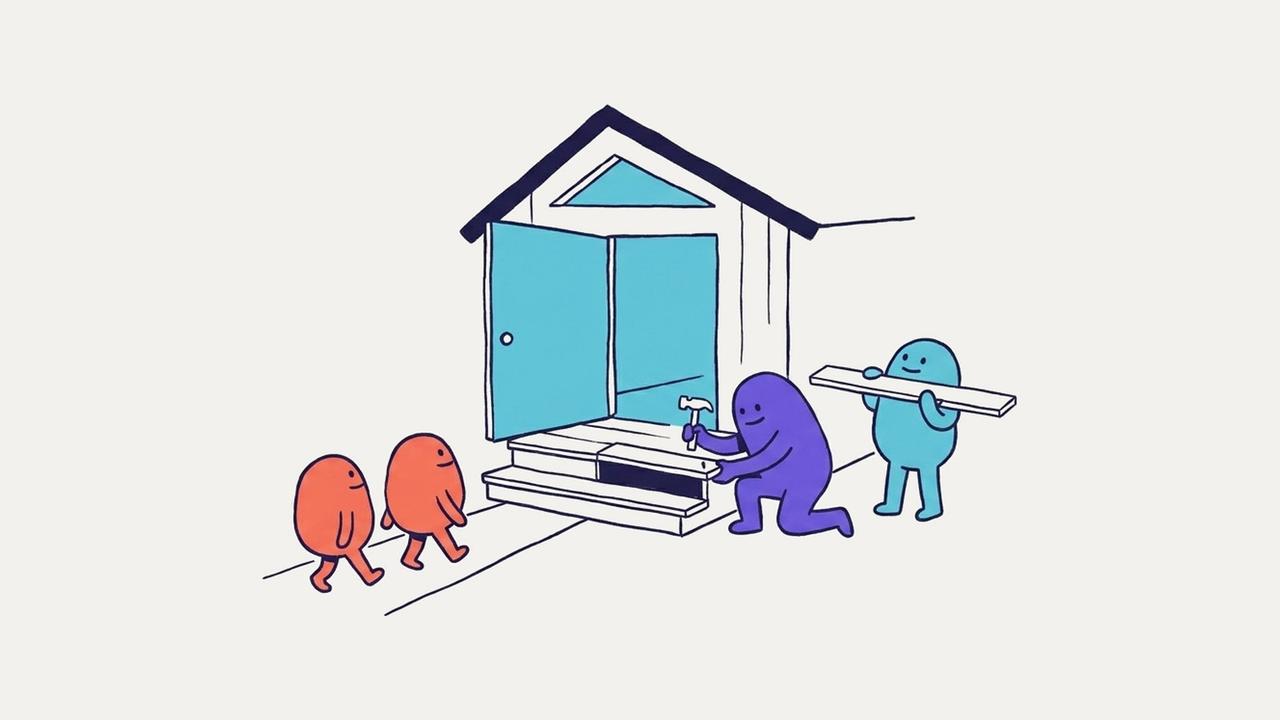
One goal for the quarter
Pick one goal and write it in the unit of your baseline. "More consultation requests: from 0 a month to 20" is a goal. "Grow brand awareness" isn't, because you'll never be able to say whether it happened.
One goal is enough for a business without a marketing department. The guides that recommend SMART goals are right about the measurable part. Where they lose small owners is in setting five of them at once.
If you need a channel list to pick from, our guide on how to get more customers goes through seven, with a real coffee cart example.
Who does the work each week
This is the line most plans leave empty. A plan that says "post on Instagram twice a week, send a monthly email, update the Google profile" has described a job. It hasn't said who holds it.
There are four realistic answers, and none is wrong for every business:
The owner. Free in money, expensive in time. It works when the weekly list is short and the owner actually blocks the hours.
A freelancer. Good for one clear piece, like the website or ad setup. You still decide what to do next and check whether it worked.
An agency. Takes on more of the work and has its own process. It works from what you give it, and the monthly fee is set by the scope you agree on. Our piece on an agency vs. an AI marketing team compares the two in detail.
An AI marketing team. Software agents that read the business's data and do the work, with the owner approving. More on how ours does it below.
Whichever you choose, write the name next to each weekly task. If the name is yours, write the hour too.
How to tell what worked
Decide before you start how you'll judge it. Three things make that honest:
- Same unit as the baseline. If you started with "219 visits, 0 requests", you judge by requests, not by likes or opens.
- A date to decide. Six to eight weeks is long enough for most service businesses to see a change in bookings or inquiries. Put it in your calendar.
- A rule written in advance. For example: if requests are still under 5 a month by the date, change the page; if they're over 15, keep it and move to the next leak.
Also write down what else changed in the same weeks: a new ad, a price change, a holiday. That's what kept us honest in the home builder's case: the page and the ads changed together, so we say so.
Attribution software can link a booking to the email or ad that came before it. Even without it, a dated baseline and a written rule get you most of the way.
A filled-in example
Here is the whole plan on one page, for a made-up dental clinic:
Example: a made-up dental clinic
| Line | What the clinic wrote |
|---|---|
| Baseline (Oct 1–31) | 640 site visits, 12 new-patient bookings online |
| Goal (by Jan 31) | 25 new-patient bookings online a month |
| Who we want | Families within 15 minutes who don't have a dentist |
| The leak | Visitors reach the booking page, few finish booking |
| Weekly work | Mon: reply to every inquiry from the weekend. Wed: one change to the booking page, tested for two weeks. Fri: ask every new patient for a Google review. |
| Who does it | Front desk on Mon and Fri; web freelancer on Wed |
| How we measure | Online new-patient bookings per month, from the booking system |
| Decide on | Dec 15: keep, change the page again, or move to the next leak |
Plum Direct's one-afternoon plan is a good companion if you want a monthly content rhythm on top of this.
How 314's AI team runs a plan
Full disclosure: this is what we build.
In 314, the AI CMO starts by reading the business: the connected booking system, POS, payments, site and ads, with every customer in one profile. From that it finds the baseline and the leak, and proposes a goal and the work to reach it. The AI team (agents the AI CMO hires and sets up for the job) does that work: pages, emails, SMS, popups, flows. The owner sees what each agent wants to do and why, and says yes before anything goes out. What happens next flows back into the same profiles, and the team checks it against the baseline and changes the next step.
So the "who does it" line has a name on it every week, and the "how we measure" line is read for you. The goal is still the owner's to set and approve. More on the AI CMO's part in What is an AI CMO?.
Long plan vs. one page
| Long template plan | One-page plan | |
|---|---|---|
| Starts from | Market analysis, SWOT | Your own numbers today |
| Goals | Several at once | One, in the baseline's unit |
| Who does the work | Often unnamed | A name on each weekly task |
| How it's judged | Often a paragraph at the end | A date and a rule set in advance |
| Time to write | A few days | An afternoon |
A long plan still has its place if you're raising money or writing a business plan for a bank. For running marketing week to week, one page you look at every Monday does more.
FAQ
How do I plan my small business marketing?
Write down one number you know today, like monthly bookings or inquiries. Find the step where most people drop off, set one goal for three months, list the work for each week with a name next to it, and set a date to judge the result.
What is the 40-40-20 rule in marketing?
It's an old direct-marketing rule of thumb: about 40% of a campaign's result comes from reaching the right people, 40% from the offer, and 20% from the creative, like the design and the wording. For a small business it's a reminder that who you send to matters more than how it looks.
How to market a small business for free?
Start with what costs time, not money: a complete Google Business Profile with recent photos and reviews, a same-day reply to every inquiry, and a short email to past customers around the time they'd normally come back. Free still needs a name and an hour each week on the plan.
How much should a small business spend on marketing?
There's no single right figure. Start from what a new customer is worth to you and what you can afford to spend to win one, then set a monthly budget you can keep for at least two to three months, long enough to judge it against your baseline.
How much does 314 cost?
From $250 a month. You can sign up and connect your tools, or book a call first.

Over five years founding several companies and building software products of many kinds. Now building the marketing team small businesses never had.